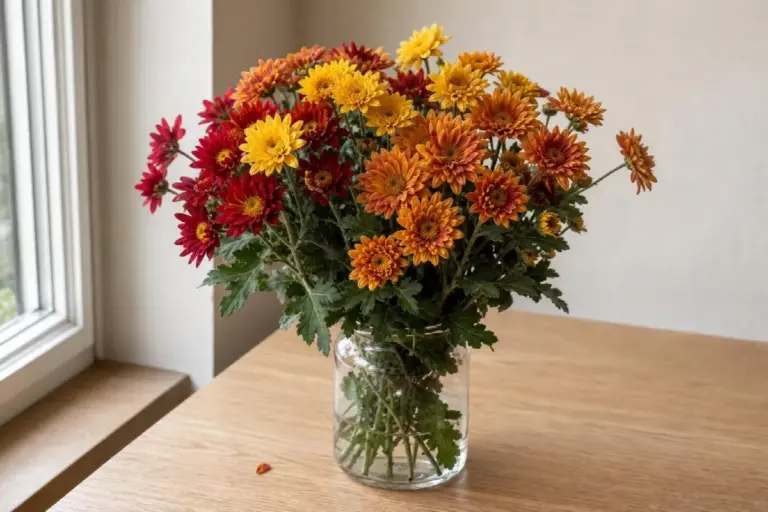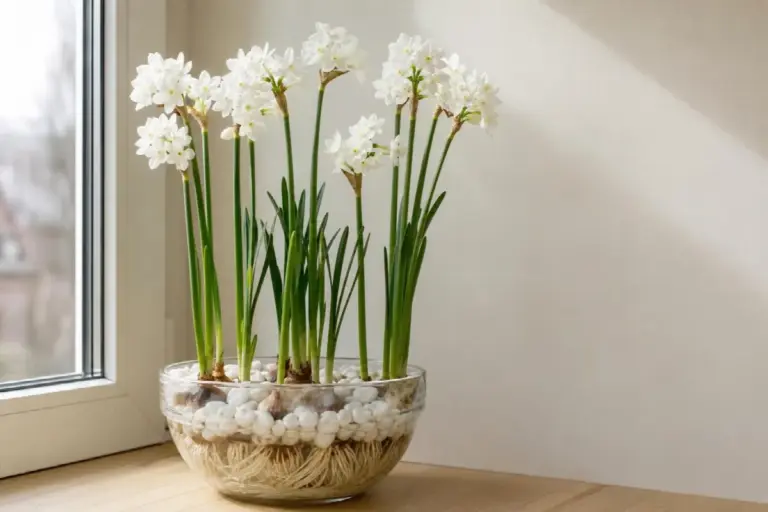
January Birth Flower: Carnation and Snowdrop Meanings, Plus What to Write
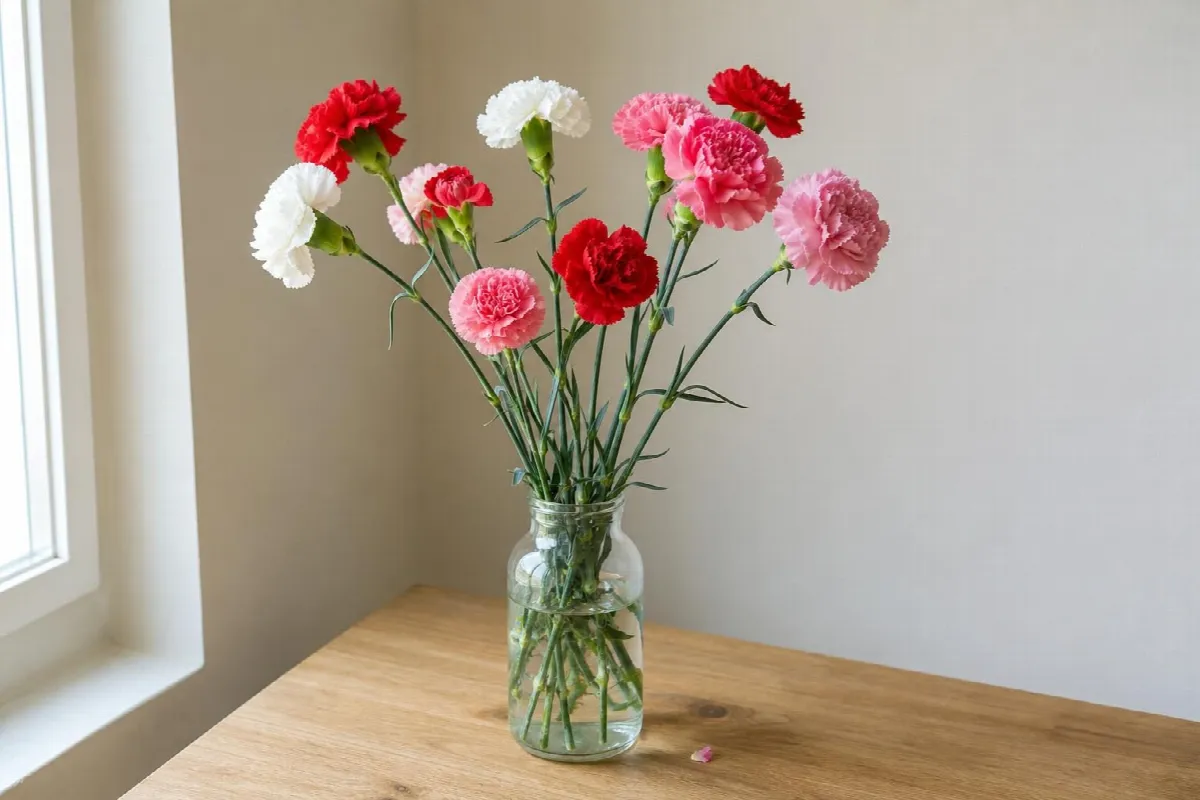
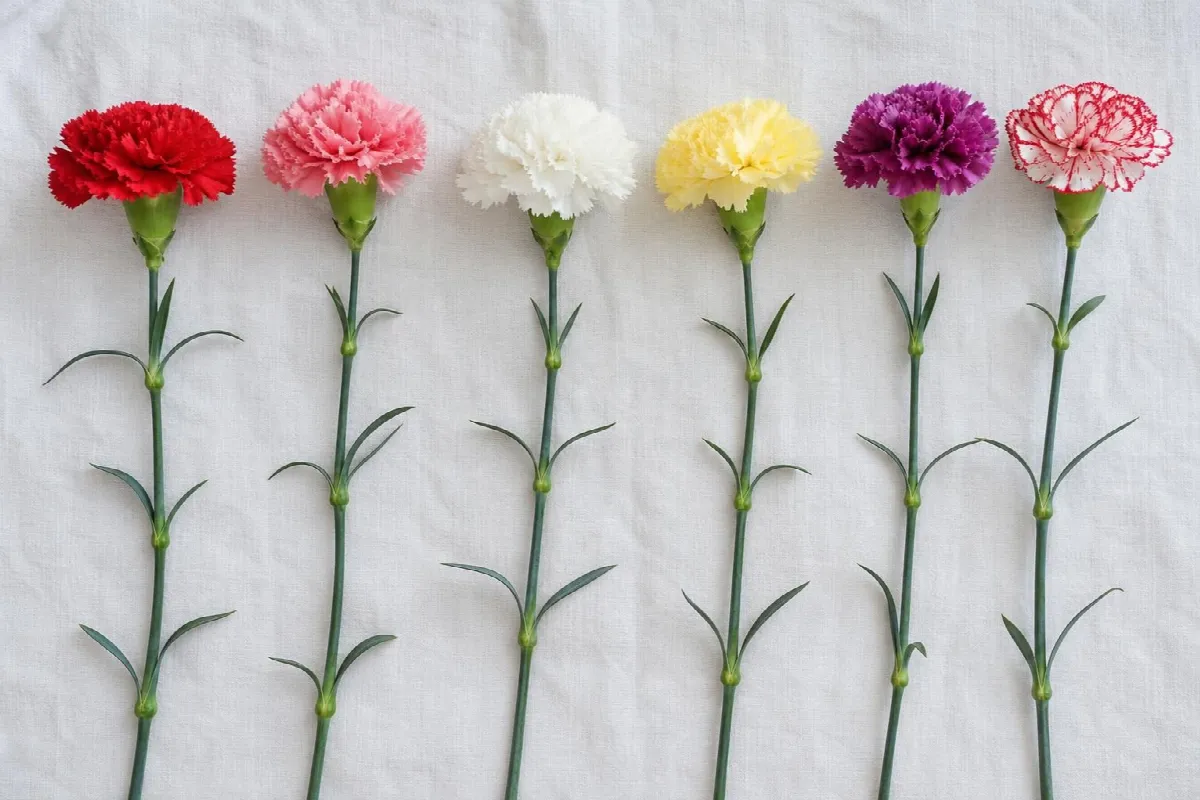
The January birth flower is the carnation (Dianthus caryophyllus), and the snowdrop (Galanthus nivalis) is the second. Carnations come in white, pink, red, yellow, purple and striped forms. Snowdrops are small white flowers that open in late winter, and Victorian flower dictionaries list them as a sign of hope.
Quick facts
- Flowers: the carnation is the primary flower and the snowdrop is the secondary one
- Botanical names: Dianthus caryophyllus (family Caryophyllaceae); Galanthus nivalis (family Amaryllidaceae)
- Colors: carnations in white, pink, red, yellow, orange, purple and variegated (striped); snowdrops are white, with green-tipped inner petals
- Meaning: carnation = “Woman’s love” and snowdrop = “Hope” (Greenaway, 1884); today, “Love, fascination, hope” (The Old Farmer’s Almanac)
- Season: snowdrops bloom late winter to early spring; garden carnations bloom in midsummer, and florist carnations are grown as cut flowers
- Grows in the US: snowdrops in USDA zones 3–9; carnations in zones 6–9
- Birthstone: garnet
- Safe for pets? No. The ASPCA lists the carnation as toxic to dogs, cats and horses. The snowdrop is not on the ASPCA’s plant list, but the RHS says it is harmful if eaten by people and pets.
- Other months: see all twelve in our birth flowers guide
Table of Contents
What is the January birth flower?
The carnation comes first. The Old Farmer's Almanac puts it plainly: "January's primary birth flower is the carnation, and the secondary flower is the snowdrop."
Why two? Because there is no single official list. The Almanac notes that "Not all cultures agree on which flowers correspond to which months." In a reply to a reader, its editors add that the list is "based on folklore likely developed in the Northern Hemisphere."
The two flowers still share one message. The Almanac's chart sums up the January flower month in three words: "Love, fascination, hope." The carnation brings the love, and the snowdrop brings the hope.
Born a month earlier or later? See the December birth flower and the February birth flower, or browse all twelve months in our birth flowers guide.
Carnation: January's main birth flower
The carnation birth flower is Dianthus caryophyllus, a member of the family Caryophyllaceae (ASPCA). According to NC State Extension, it comes from the Mediterranean area, though its exact wild range is unknown. Florist varieties grow 3 to 4 feet tall and are raised as cut flowers.
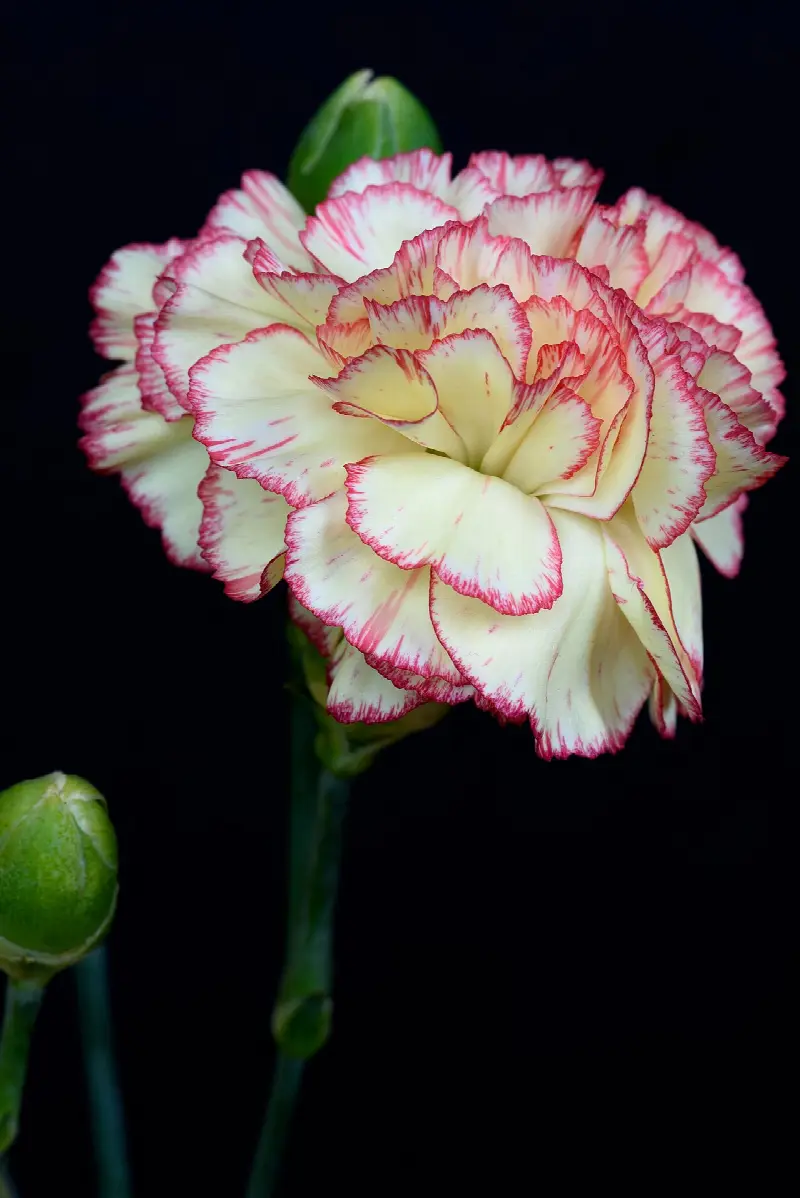
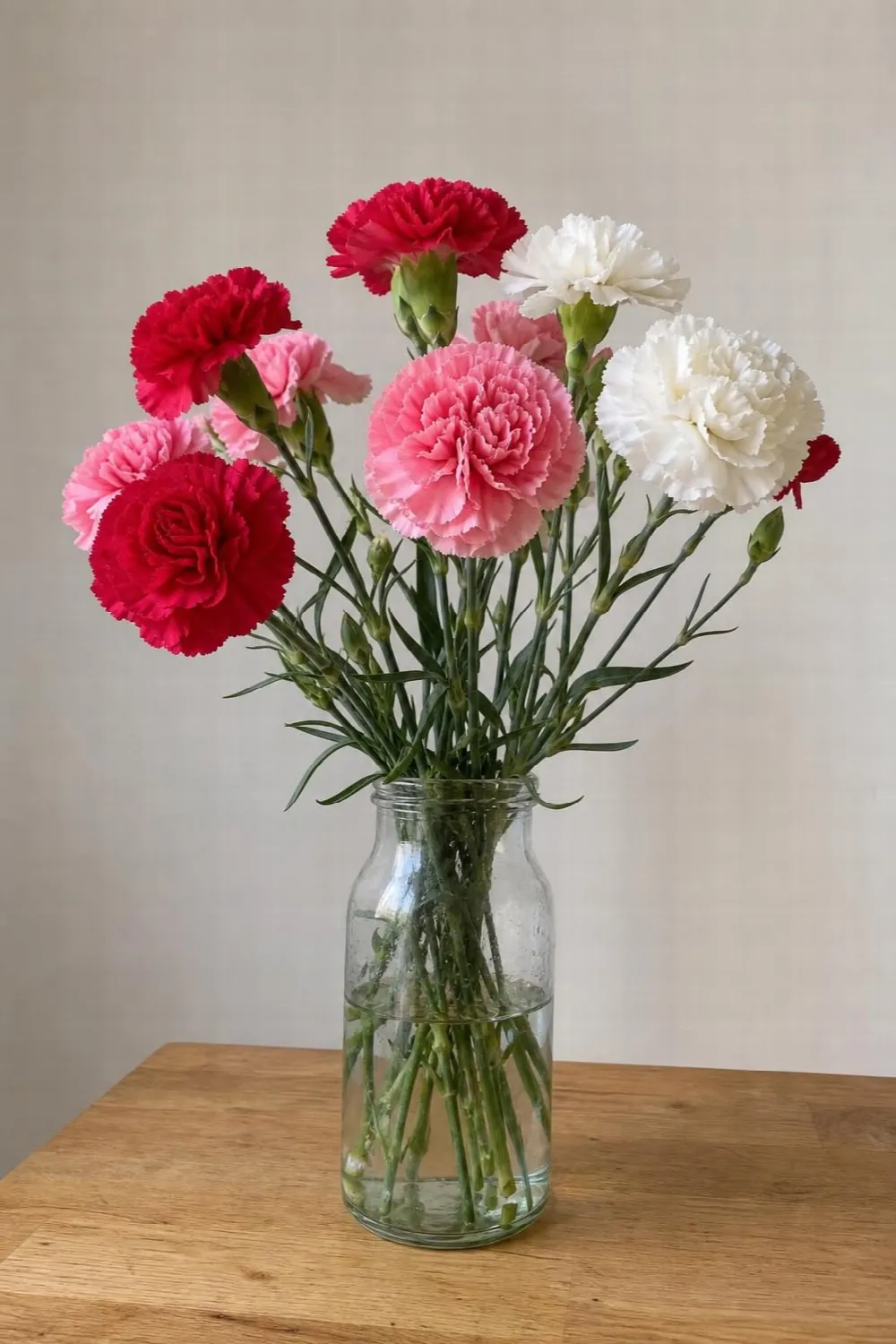
I buy carnations often and arrange them at home. Red is my favorite carnation color, and red roses have been my special flower color since I was a child.
What carnations mean
In Kate Greenaway's 1884 Language of Flowers, the carnation sits under the pinks, the Dianthus group it belongs to. Her entry "Pink, Carnation" means "Woman's love." Here "pink" is the name of the plant, not the color.
Henrietta Dumont's 1851 Language of Flowers, published in Philadelphia, gives the pink the meaning "Pure love." She also records an old English name for the carnation: the "clove-gilly flower," after its clove-like scent.
Carnation colors and their meanings
The Victorian books gave meanings to only a few carnation colors, and not all of them are sweet. Where no old source gives a meaning, the table says so instead of making one up.
| Color | Traditional meaning | Source |
|---|---|---|
| Deep red | "Alas! for my poor heart" | Greenaway, 1884 |
| Striped | Refusal | Greenaway, 1884 |
| Yellow | Disdain | Greenaway, 1884 |
| White | Purity and faithfulness (Anna Jarvis, 1911) | Library of Congress |
| Pink | No traditional meaning recorded | (The Victorian "pink" entries name the plant, not the color) |
| Purple | No traditional meaning recorded | — |
Deep red is a little dramatic for a birthday card, even if it's my favorite to look at. Yellow and striped carry a sting, so skip them in a romantic bouquet if the person knows their flower language. For every shade in depth, see our carnation meaning guide.
Carnations in American history
The January birth flower has a place in US history, too. The scarlet carnation is Ohio's state flower, and the state's law adopts it "as a token of love and reverence for the memory of William McKinley".
The white carnation has its own American story. According to the Library of Congress, Anna Jarvis wore a white carnation, her mother's favorite flower. In 1911 she wrote that "Its whiteness stands for purity," and its lasting qualities for faithfulness. In 1913, a House resolution asked officials to wear a white carnation on Mother's Day. The full story is in our guide to carnations for Mother's Day.
My notes: carnations at home
When I bring carnations home, I follow the same routine every time. I strip off any leaves that would sit under the water, trim the stems, and change the water every day or two.
A few stems can look thin on their own, so I tuck in some greenery between them. It makes a small bunch look fuller.
Snowdrop: January's winter birth flower
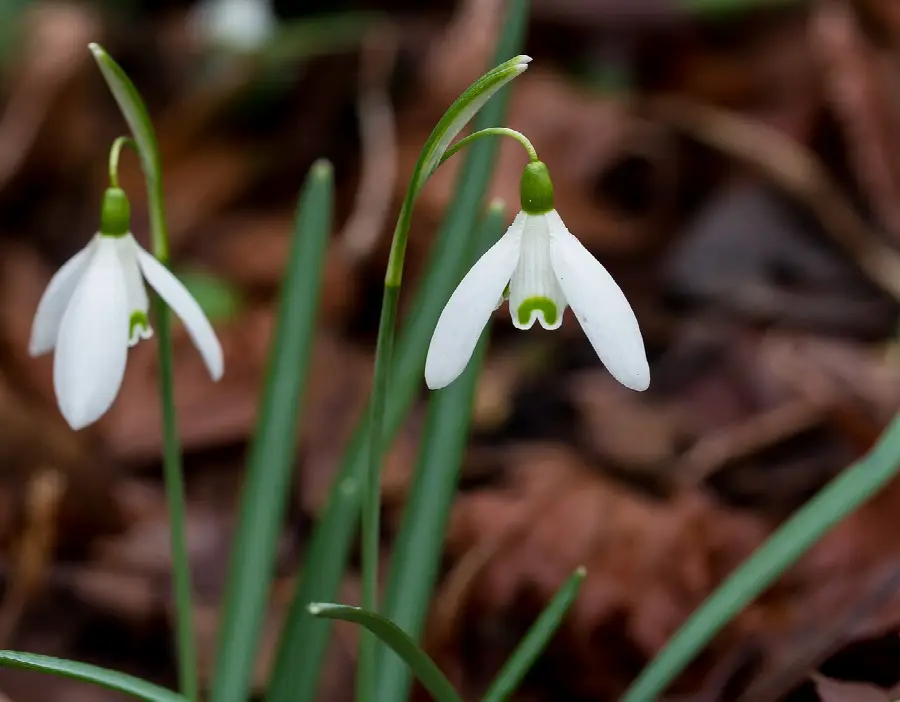
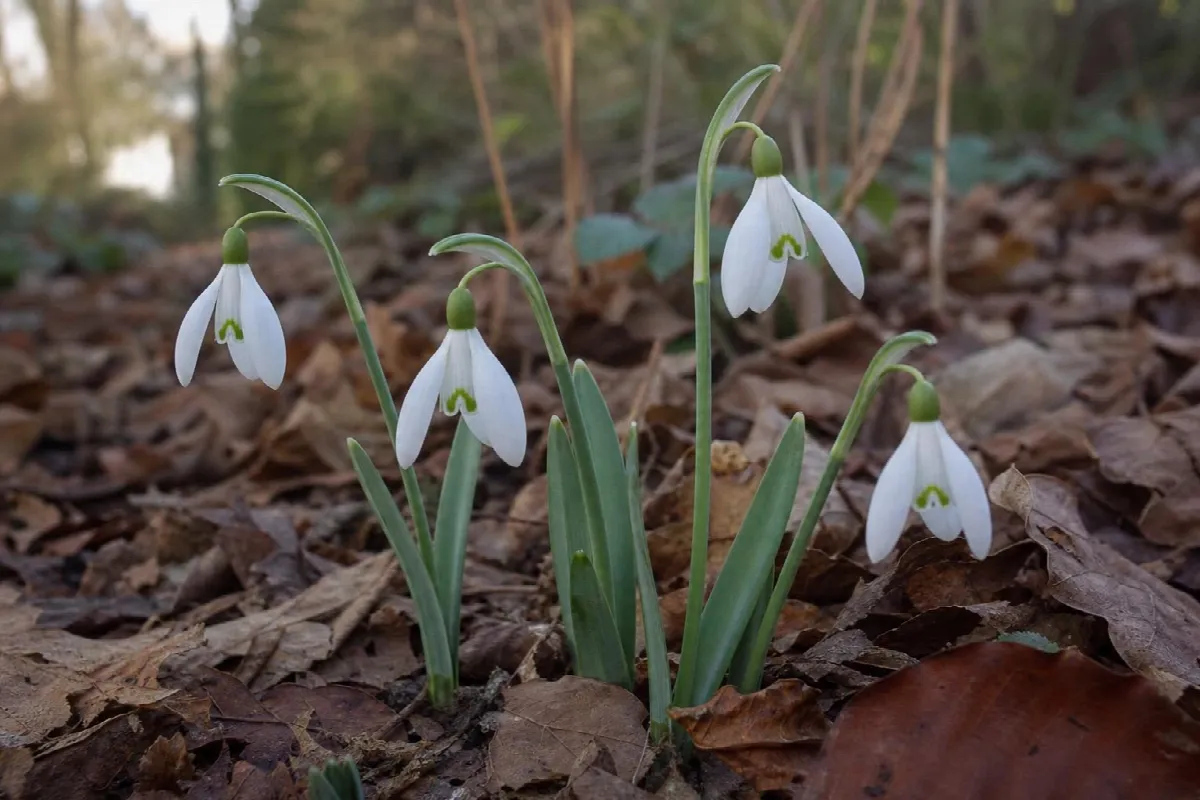
The snowdrop is the second January birth flower, and it's a very different plant. The RHS describes white, nodding flowers with green-tipped inner petals. Botanically, it belongs to the family Amaryllidaceae.
What snowdrops mean
Both Victorian dictionaries agree: the snowdrop means hope (Greenaway, Dumont). Dumont calls it the herald of spring. Her floral calendar gives the snowdrop to February 2, the feast of the Purification, also known as Candlemas.
The Woodland Trust lists "flower of hope" among the snowdrop's common names and calls it a symbol of hope. It also records the Candlemas link, which gave the flower another name, "Candlemas Bells."
Folklore adds a warning. An old belief held that bringing a snowdrop indoors brought bad luck. That's folklore, not fact, but it's a fun story to tell.
Where snowdrops grow
Snowdrops are native to Europe and southwestern Asia, says NC State Extension. In the US, they suit USDA zones 3 to 9 and bloom from late winter to early spring. In the UK, the Woodland Trust gives their flowering time as January to March.
The RHS lists some charming common names, including "fair maids of February." It also notes that the snowdrop is not native to Great Britain or Ireland.
The only snowdrops I have seen in person were in the cooler north of Pakistan.
Are January birth flowers safe for pets?
Not really. Both can upset a pet's stomach if eaten. Here is what the sources say.
Carnation. The ASPCA lists it as "Toxic to Dogs, Toxic to Cats, Toxic to Horses." The toxic principle is an "unknown irritant," and the signs are "mild gastrointestinal signs, mild dermatitis."
Snowdrop. The snowdrop does not appear on the ASPCA's cats or dogs plant lists. That doesn't make it safe. A veterinary article on spring bulbs, hosted by ASPCA Pro (Lieske, Veterinary Medicine, 2002), lists Galanthus nivalis among plants that cause mild to moderate stomach upset, with vomiting and diarrhea. Its alkaloids, including lycorine, sit mostly in the bulb.
The RHS says the snowdrop is harmful if eaten by people and pets. NC State Extension rates its poison severity as low.
We have a cat at home, so I keep carnations and any other toxic flowers on the balcony or up high, out of our cat's reach.
If you think your pet has eaten either plant, call your vet or the ASPCA Animal Poison Control Center right away.
January birth flower and birthstone
January's birthstone is garnet. GIA says "Those born in January are lucky to have the beautiful and diverse garnet as their birthstone."
If you choose a red garnet, deep red carnations are the natural match. A white carnation next to a dark stone looks crisp and simple, too. For every month's flower and stone together, see our guide to birth flowers and birthstones.
January birthday flower gift ideas
You don't have to choose between the two January birth flowers. A carnation and snowdrop flower gift can cover both, as long as you mix fresh and lasting pieces:
- A carnation bouquet in their favorite color. Florist carnations are grown as cut flowers, so they're easy to ask for. Use the color table above to pick a shade with a kind meaning.
- A snowdrop print or necklace. A lasting way to give the snowdrop half of the pair, and the safe choice for homes with cats or dogs.
- Carnations with a garnet. A small garnet piece alongside red carnations puts the January birth flower and birthstone in one gift.
More ideas for every month are in our birth flower gifts guide.
What to write in a January birthday card
A January birthday often lands in the post-holiday slump, so a warm card goes a long way. A few lines borrow the sourced meanings of the January birth flowers: hope for the snowdrop (Greenaway), and faithfulness for the white carnation, from Anna Jarvis's 1911 description. Copy any line as it is, or change a word to make it yours.

One check before you send: if you quote an old meaning, stick with hope, love or faithfulness. Yellow carnations meant disdain and striped ones meant refusal, so they don't belong next to a loving card.
January birth flower FAQ
What is the birth flower for January?
The carnation is the main January birth flower, with the snowdrop as a second one. The Old Farmer's Almanac names the carnation as January's primary birth flower and the snowdrop as the secondary one.
Is the snowdrop a January birth flower?
Yes, it's the secondary January birth flower on The Old Farmer's Almanac list. It blooms in late winter to early spring, and Victorian flower dictionaries gave it the meaning "Hope".
Why does January have two birth flowers?
Birth month flower lists come from folklore, and "Not all cultures agree on which flowers correspond to which months," says The Old Farmer's Almanac. Different traditions favored different flowers, so many lists give January two.
What do the different colors of carnations mean?
In Greenaway's 1884 dictionary, deep red means "Alas! for my poor heart," striped means refusal and yellow means disdain. White came to stand for purity and faithfulness through Anna Jarvis and Mother's Day. For every shade, see our carnation meaning guide.
Sources
- The Old Farmer's Almanac, Birth Month Flowers and Their Meanings
- Kate Greenaway, Language of Flowers (1884): Project Gutenberg
- Henrietta Dumont, The Language of Flowers (Philadelphia, 1851): Project Gutenberg
- NC State Extension Plant Toolbox, Dianthus caryophyllus and Galanthus nivalis
- Royal Horticultural Society, Galanthus nivalis
- Woodland Trust, Snowdrop
- Library of Congress, Inside Adams blog (Jennifer Harbster, 2010): Anna Jarvis and the white carnation
- Ohio Revised Code, section 5.02, State flower: text via law.onecle.com
- GIA, January Birthstones
- ASPCA, Carnation and the plant lists for cats and dogs
- Lieske, "Spring-blooming bulbs: A year-round problem," Veterinary Medicine, August 2002: PDF via ASPCA Pro

Kiran
I’m a lifelong flower lover who grows and arranges flowers at home in Saudi Arabia. I write PetalSay to help you pick the right flowers without worrying, and find the right words for the card.